/
Gates
Sliding Barriers for Abu Dhabi Communities and Business ParksSliding Barrier supplier in Abu Dhabi
Sliding barriers for Abu Dhabi business parks, residential blocks and yards that have little room for a swinging arm or gate leaf.
A sliding barrier controls vehicles without needing swing room, which suits the tighter entrances found around Abu Dhabi's commercial and residential blocks. Gated compounds and mixed-use developments near Al Bateen and Mussafah, and business parks or logistics yards in the industrial areas, often want a firm boundary that still moves quickly at busy times.
We consider the queue behind the barrier, how many vehicles use it at peak, and whether plate reading, tags or guard-controlled entry will be used. Dust on the track and sun on the electronics are real concerns, so we plan cleaning and inspection into the service routine. Take a look at the gate barrier category for related equipment.
A sliding barrier is a low horizontal gate that moves sideways to control vehicle entry where a boom or swing gate will not fit. It uses a motor, loop detectors, photocells and access control such as tags or keypads. It suits communities, business parks and yards.
- Moves sideways, so it suits lanes with limited swing space or headroom
- Loop detectors and photocells protect vehicles and pedestrians
- Works with tags, tickets, keypads and plate recognition
- Needs a clear run beside the lane and a solid foundation
- Keep the track clear of sand and debris to prevent noise and wear
- Space-saving sideways movement
- Loop detector and photocell safety
- Tag, keypad and ticket ready
- Visible warning lights
- Manual release
- Clear view of the leaf for drivers
Free site survey · Professional installation · After-sales support
Product overview
An access lane at a business park near Mussafah, a residential block in Al Nahyan or a depot in Industrial Area 4 may have a narrow throat with no room for a long swinging arm. A sliding barrier moves sideways along a track, taking the lane width and little more.
Operation in brief
The barrier leaf is mounted on a carriage that runs along a rail or on guide wheels. A motor moves it across the lane, and sensors and safety devices watch for vehicles. Because the leaf clears the lane sideways, it works under low ceilings or beside walls where an overhead arm would not.
Checklist for planning
- Lane width and available run beside it
- Vehicle types and speeds
- Access method: remote, card reader, ticket or number-plate recognition
- Loop detector positions for safety and automatic closing
- Foundation and cable routes
Managing dust and wear
Tracks accumulate sand quickly, and abrasive dust wears rollers and racks. Include track cleaning in the maintenance schedule, lubricate moving parts and check wheels and stops.
Coordinating with security
Discuss integration with cameras and visitor management. Decide what should happen on power failure, and provide a manual release. Signage and lane markings help drivers understand the sequence.
Price considerations
Lane width, leaf construction, operator rating, safety accessories and access integration set the quotation, together with civil works. For plain lifting arms, see gate barriers and parking savers.
Vehicle safety and visibility
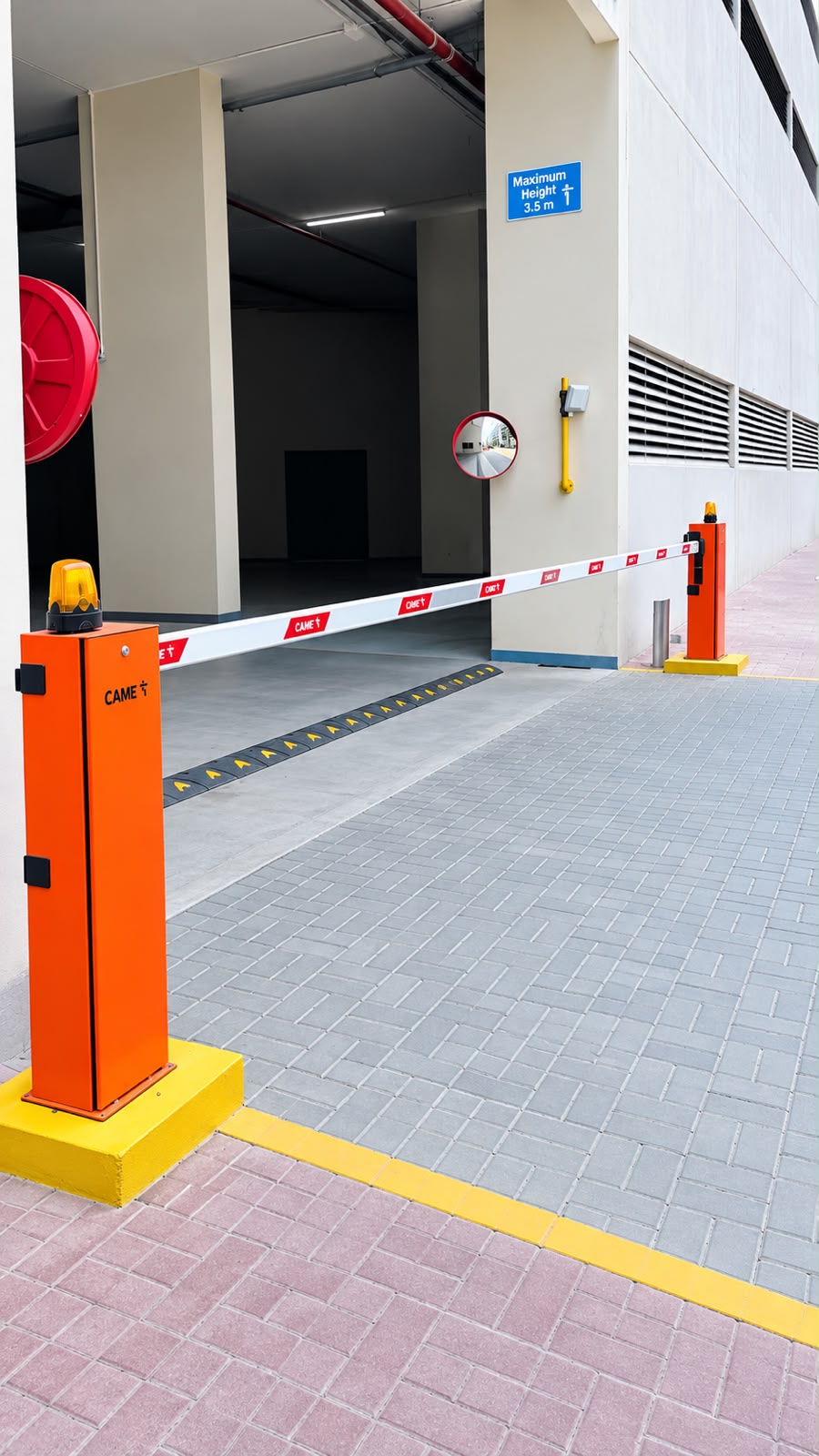
Drivers need to see when the barrier is moving. Use flashing lamps, high-visibility markings and clear signage, and position loop detectors so the leaf never closes on a vehicle. Pedestrian routes should be separated from the vehicle lane.
Test the reverse action regularly and log results as part of the safety file.
Power and communications
Plan ducts for power, loop detectors and any network cable to the controller before the base is poured. Adding ducts later means breaking slab, and it is rarely cheaper than doing it during the civil works. Keep the manual release key with a named person on each shift, and check that it is accessible in an emergency. Include it in the site safety checklist so it is not forgotten.
To plan an entry lane, request a quote and QNAD will survey it.
Specifications
| Use | Gated communities, business parks |
|---|---|
| Control | Tag, keypad, ticket or plate reader |
| Service | Supply, installation, repair and maintenance |
| Movement | Horizontal, sideways |
Supply in Abu Dhabi
Qasar Al Neil Automatic Doors supplies Sliding Barriers in Abu Dhabi, with a free site visit, installation and servicing by our own technicians.
Do you supply Sliding Barriers in Abu Dhabi?
Can you supply and install Sliding Barriers together?
Gate Barrier: frequently asked questions
How do I book a site visit in Abu Dhabi?
Send us a WhatsApp message or use the quote form with your location and the door or gate type. We will then arrange a site visit to measure and advise.
Include the area, such as Al Khalidiyah, Saadiyat Island or Al Reem Island, plus photos and approximate dimensions if you have them. During the visit we check structure, power and access, then follow with a written quotation. You can also call +971 50 494 8667. Browse our gates and automatic doors first.
Can an automatic gate work with solar power?
Yes, an automatic gate can run on solar power. A low-consumption operator paired with a solar panel and battery works reliably in sunny UAE conditions, which helps at farms, rest houses and remote compounds without mains nearby.
The system is sized for gate weight, number of daily cycles and accessories such as intercoms, so a heavy or busy gate needs a larger panel and battery. Panels need regular cleaning of dust. Ask us to size a solar kit for your sliding gate or swing gate.
How do bollards integrate with traffic lights and access control?
Automatic bollards connect to traffic signals, loop detectors, card readers, ANPR cameras or intercoms, so they lower for authorised vehicles and rise again after passage.
Loop detectors prevent a bollard rising under a vehicle, and traffic lights tell the driver when it is safe to cross. Emergency access can be arranged with a key switch or fire service override. Integration is planned during design so wiring is ready. Learn more about automatic bollards for controlled entrances.
What is a parking barrier gate?
A parking barrier gate is an automatic boom that raises and lowers to control vehicle entry to car parks, compounds and private roads. It can be triggered by ticket, card, remote, ANPR or a manual button.
Barriers help enforce parking rules, record entries and keep unauthorised vehicles out. Loop detectors stop the boom lowering onto a vehicle. Explore sliding barriers and swing gate barriers to see options for entrances.
What barrier arm length do I need?
The arm should cover the full lane width, typically 3 to 6 m. Measure the clear width between the barrier post and the far kerb or wall, and then choose the next available length.
Articulated or folding arms work under low ceilings, and skirted arms add pedestrian safety by blocking a gap under the boom. Very long booms may need a support post. A site visit confirms lane width and headroom for your barrier entrance.
What is a turnstile gate?
A turnstile gate lets one person pass at a time and is used for pedestrian control in offices, stadiums, metro stations and factories. It reduces tailgating by allowing one authorised credential per passage.
Tripod, full-height and speed gate options exist. Tripod units suit indoor offices, full-height turnstiles suit outdoor or high-security areas, and speed gates suit smart lobbies. See our turnstile gates for more detail.
What is a sliding barrier?
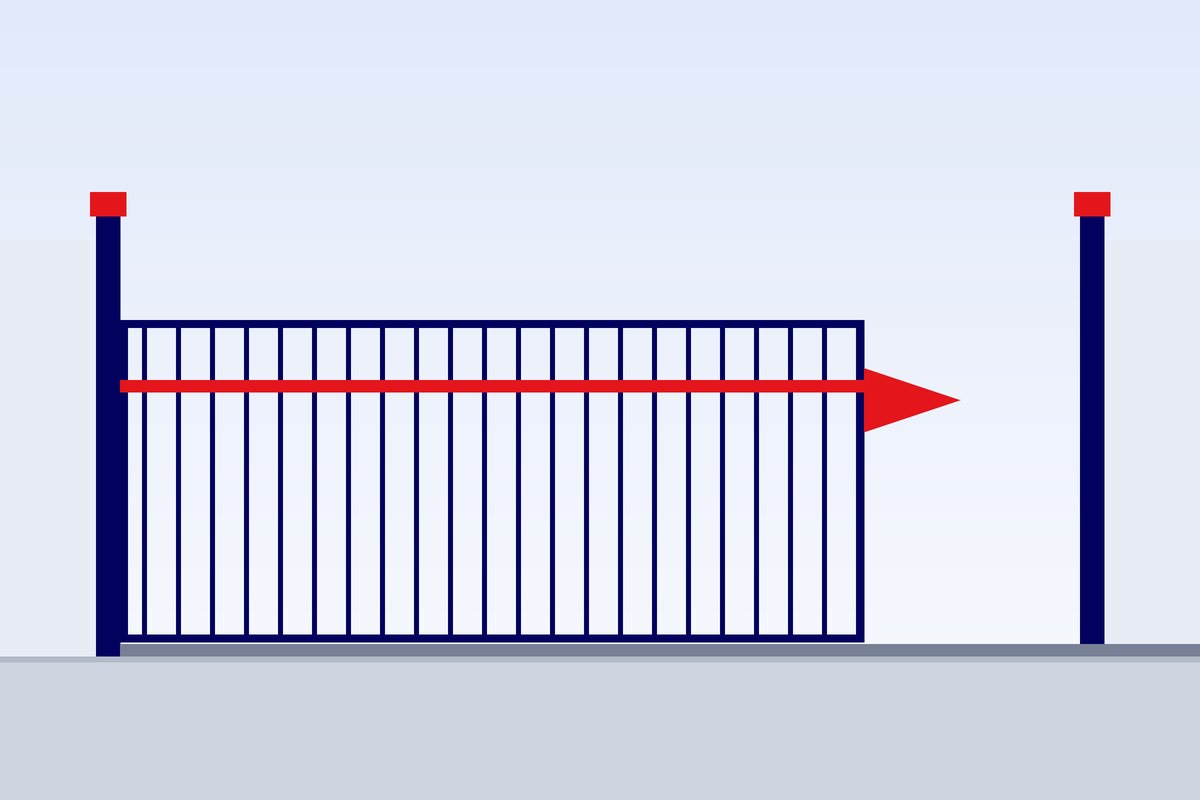
A sliding barrier is a horizontal panel or fence-style gate that moves sideways across an entrance. It is useful where a rising boom would hit a low ceiling, or where a stronger physical block is needed than a boom offers.
It suits gated communities, business parks and secure zones with limited headroom. It needs clear space beside the opening for the panel to travel. Explore our sliding barrier range.
Do I need a site survey before installation?
Yes, a site survey is strongly recommended before installation. It checks dimensions, structure, headroom, power, drainage and access so the right model is quoted and surprises are avoided.
Qasar Al Neil Automatic Doors can visit your site in Abu Dhabi to confirm details. Photos and measurements help, but a visit catches issues such as uneven ground or weak posts. The survey also lets us recommend safety devices and access control. Contact us to arrange one for your gate or door.
What are common signs an automatic gate needs repair?
Common signs an automatic gate needs repair are grinding noises, jerky travel, slow response to the remote, stopping midway, sensor false triggers and unusual heat from the motor. Call a technician promptly if you notice any of them.
Continuing to run a faulty gate can damage the operator, and a failing safety device is a risk to people. Do not force the gate. Our team offers repair for sliding gates and swing gates, including 24/7 emergency repair support.
What power supply do automatic gates and doors need?
Most residential operators run on a 230 V single-phase supply on a dedicated, protected circuit, while heavy industrial units use 380 to 415 V three-phase. Low-voltage 24 V operators are common for added safety.
Cable size, distance from the mains and earthing all matter, and a qualified electrician should complete the supply. Solar or battery backup is an option where mains is far away. We confirm power needs during the survey for your gate or garage door.
What should I do if my gate remote stops working?
First replace the remote's battery, then check that the receiver has power and a clear antenna. If it still fails, the remote may need re-programming or the receiver replacing.
Try the wall button or keypad to see whether the operator itself works. If it does, the fault is in the remote or receiver. If nothing responds, call a technician instead of forcing the gate. Contact us for help with sliding gate and swing gate remotes.
What is included in the warranty?
Warranty commonly covers manufacturing defects in the motor, control unit and mechanical parts, with labour terms set in your contract. The exact duration and cover are stated in your quotation.
Misuse, unauthorised modification, impact damage and lack of servicing are usually excluded. Keeping to a maintenance schedule helps protect your cover. Ask for the warranty terms in writing before you order a gate or door.
Do you offer annual maintenance contracts?
Yes, Qasar Al Neil Automatic Doors offers scheduled maintenance contracts for automatic doors, gates, shutters and barriers. They cover inspections, lubrication, safety testing and priority call-outs.
Parts can be included or quoted separately, depending on the plan. A contract gives predictable visits, catches wear early and keeps safety devices tested. Tell us what you have installed and how often it is used and we will propose a plan. See our automatic doors and gates maintenance.
Which payment terms are available?
Payment terms are set out in your quotation. Typical structures are an advance on order confirmation, a balance against delivery or installation, and retention for large projects.
Terms can differ by project size, custom fabrication and imported items. Ask us to explain the schedule before you confirm, so you know when each payment falls due. Request a quotation for your gate or garage door to see the terms that apply.
Do you serve areas outside Abu Dhabi?
Yes, we cover projects across the UAE, not only Abu Dhabi. We also work with clients in neighbouring emirates.
Contact Qasar Al Neil Automatic Doors with your location so we can confirm scheduling and any travel arrangements. A photo or short description of the job helps us plan. Browse our gates, garage doors and bollards before you call.
Why does my sliding gate drag or stop halfway along the track?
Start with the track. Sand, small stones and leaves collect in the groove and the wheels climb over them, which shows up as a gate that slows down or stops at the same spot every time. Clean the track and watch the leaf move by hand with the motor released: it should glide with one hand.
If it still drags, the cause is usually worn carrier wheels, a rack that has sagged or a leaf that has dropped on its guides. A low force setting on the control board can also make the gate give up early. Qasar Al Neil Automatic Doors can inspect and correct the cause rather than just turning the force up.
Why does one leaf of my double swing gate move ahead of the other?
On a double gate the two operators are meant to work in step, with the second leaf slightly delayed so the leaves do not clash. If one runs ahead or lags, the usual causes are a worn arm joint, a sagging hinge on one leaf, an operator that has lost its travel setting or a control board delay that has drifted.
A leaf that has dropped on its hinges is the one we see most, because the extra friction slows the motor. Qasar Al Neil Automatic Doors checks the hinges and the arm geometry first, resets the travel and force settings and then reprograms the delay between the leaves.
Why does my vehicle barrier close while a car is still underneath or beside it?
The barrier should never close while a car is in its path, so a closing leaf points to a failed safety input. The most common cause is a loop detector that has lost sensitivity, often where the road surface has cracked and cut the wire. A blocked or misaligned photocell is the second cause.
Do not leave it in use. Switch it to manual if you can and call for a repair. Qasar Al Neil Automatic Doors tests the loop with a meter, repairs or relays the cable and checks the detector settings, then proves the photocells and the safety edge.
My parking lock arm will not move when I press the remote. What should I check?
Check the simple things first. Replace the battery in the handset, then stand close to the lock and try again. If the lock runs on its own battery, the battery may be flat, which is the most common reason an arm stops responding. Check the arm for an obstacle, a stone or dirt in the hinge.
If none of that fixes it, the receiver may need reprogramming or the motor may have a fault. Qasar Al Neil Automatic Doors can test the unit on site, replace the battery or receiver and reprogram your handsets.
What does a sliding gate service visit actually include?
A proper visit is a working check, not a quick look. The technician cleans and lubricates the track and rollers, checks the rack for wear and loose fixings, tests the photocells and the safety edge, checks the limit switches and force settings and operates the manual release.
The remote and receiver are tested, the control board is checked for fault history and the battery backup, if fitted, is load tested. You get a short report listing anything that is worn, so repairs can be planned instead of arriving as a breakdown. Ask Qasar Al Neil Automatic Doors about a maintenance schedule that suits how heavily your gate is used.
Should I choose an arm operator or an underground operator for my gate?
Arm operators are the practical choice for most existing gates. They are quicker to install, easier to reach for service and work with a wide range of leaf sizes. Underground operators are better when the look of the gate matters and you do not want hardware on the pillar, but the box needs proper drainage or it fills with water and sand.
Very heavy or wide leaves, windy sites and gates that open uphill can change the answer, so we confirm it on the site visit instead of choosing in advance.
Can a sliding barrier be used where a boom barrier cannot?
That is exactly where it helps. A boom arm needs vertical room to rise and a clear side to swing through, and a long arm over a wide lane flexes and slows down. A sliding barrier moves along the line of the boundary, so low canopies, cables and tight roads do not matter.
It does need a run beside the lane at least as long as the leaf. If that is missing, a narrower lane with a shorter boom arm or a bollard may be the better choice. We check the layout on the site visit.
Should I choose a battery, mains or solar parking lock?
Mains power is the most dependable if a socket is close to the bay, because there is no battery to replace. A battery lock is easier to install in a car park without cabling, as long as someone remembers to change the battery on time. A solar model suits an open-air bay with plenty of sun, but it needs a panel that stays clean.
The right choice depends on where the bay is, how often the lock is used and who looks after it. We check on the site visit before quoting.
Can a sliding gate motor be replaced without replacing the gate?
Usually yes, as long as the leaf and track are in good condition. The test is simple: with the motor released, a healthy leaf moves by hand without much effort. If it does, a new operator can be matched to the leaf weight and length, fitted to the existing rack or a new one, and set up with the old controls or new ones.
If the leaf is bent, the track is badly worn or the rack is damaged along its length, those parts are repaired at the same time, otherwise the new motor will wear quickly. We check this on the site visit before quoting.
Is a solid swing gate a problem in strong wind?
A solid leaf acts like a sail. In a strong gust it can push against the operator, trip the obstruction setting or, in the worst case, bend the arm. Louvred or slatted leaves catch less wind, and heavier operators with an electric lock hold a closed gate steady.
If your gate faces open ground or a gap between buildings, mention it on the site visit. Qasar Al Neil Automatic Doors can choose an operator rated for the leaf size and set the force limits so wind alone does not stop the gate.
What entry control can be fitted to a sliding barrier?
Almost any common method: RFID tags or cards, long-range readers, keypads, intercoms, remote handsets, ticket machines and number-plate recognition cameras. The control board takes a signal from the reader and opens the barrier, then holds it open until the loop confirms the car has gone.
For a gated community or business park we normally link the barrier to a system that records who entered and when. Qasar Al Neil Automatic Doors can match the reader to your existing access control if you already have one.
What happens if someone drives over a raised parking lock?
A parking lock is built to stop a car rolling in, not to withstand a car driving through it. A slow bump from a bumper is normally fine, but a heavy impact can bend the arm or loosen the base plate. That is why we fix the plate to a solid floor with proper anchors and fit an arm strong enough for the bay.
If an arm has been hit, stop using it and have the arm and the anchors checked. Qasar Al Neil Automatic Doors repairs and replaces arms and refixes loose base plates.
Can I add a keypad, intercom or phone control to my existing sliding gate?
In most cases, yes. Modern control boards have inputs for keypads, intercoms, card readers and GSM or Wi-Fi modules, and an older board can be replaced with a new one without touching the motor.
What matters is the board you already have and where the cables can run. We check the board, the wiring route to the entrance and how many users need access, then recommend the simplest route. Details of the options are on our pages for GSM and Wi-Fi gate openers and remote controls and receivers.
What does a technician check before automating my manual swing gate?
The gate must be in good shape first. We check that the leaves hang true and swing freely by hand, that the hinges are not worn and that the pillars are solid enough to carry an operator. We also check how far each leaf opens, whether the ground allows full travel and where power and cables can run.
Any repair to the hinges or leaf is done before the operators go on, because automation will find every weak point in a gate that has been pushed by hand for years.
How often should a busy sliding barrier be checked?
It depends on how many vehicles pass each day, but the pattern is the same: heavy use means more wear on the track, wheels and drive, and dust and heat shorten the life of the electronics. Busy entrances benefit from a scheduled visit rather than a call after a breakdown.
A visit cleans the track, checks the drive and rollers, tests the loops, photocells and safety edge, reviews the control settings and checks the lights. Qasar Al Neil Automatic Doors can set a schedule to match your traffic, and we write down what we find so patterns show up early.
Can one system manage parking locks for a whole building?
Yes. A building can run many locks, each with its own handset, or share a system that lets the management office add and remove users. For residents, that means a lost handset can be cancelled without changing every lock in the car park.
It helps to decide this before installation, because the lock model and the control method affect how users are added later. Qasar Al Neil Automatic Doors can advise on options on site and quote the number of locks and the controls together.
Can an automatic gate be opened with my phone?
Yes, many operators and control boards support smartphone control through a Bluetooth or Wi-Fi module, or through a relay connected to a smart access system. This lets you open the gate from the car, share access with family, and in some systems review activity. A physical remote or keypad is still worth keeping as a fallback if the phone battery or network fails.
We can integrate app control when supplying an automatic sliding gate.
How do I stop my gate from being triggered by passing cars or people?
Adjust or change the trigger, not the gate. Intercom, keypad and remote inputs should be the only ways to open it, and any loop or radar sensor should be aimed so it only covers your driveway. If an exit sensor reacts to traffic outside, its detection zone or sensitivity needs narrowing. Interference from nearby radio devices can also send false signals to older remotes.
A technician can retune sensors and upgrade to coded remotes during a service visit.
How do I choose between a parking barrier and a sliding barrier?
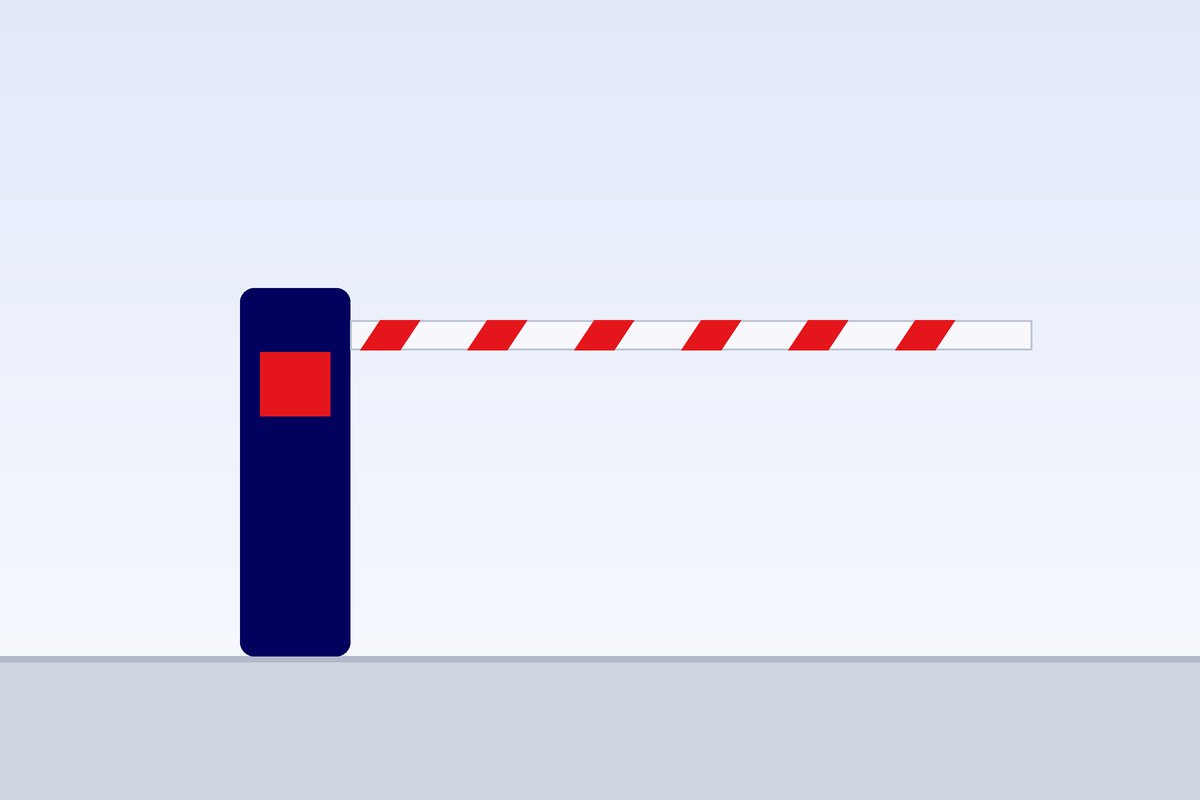
Pick a boom barrier when there is room for the arm to rise and a sliding barrier when overhead or side space is limited. A boom arm is quick and suits car parks and gated entrances. A sliding barrier moves horizontally and provides stronger blocking for secure entrances with restricted headroom, such as low ceilings or covered areas.
Look at the sliding barrier and discuss your entrance layout with us.
What happens to a swing barrier or gate barrier if someone tailgates?
Tailgating is reduced but not always eliminated by the equipment alone. Turnstiles allow one person per credential, and swing barriers close quickly with sensors that detect a second person. Guard supervision, signage and closely timed sensor settings add further control.
The right mix depends on the level of security required at the entrance. We can advise when you plan controlled entrances using swing gate barriers.
What affects the cost of an automatic gate?
Gate cost depends on the gate type, width, weight and material, the strength of the operator, and the safety and access devices fitted. A heavy steel sliding gate needs a stronger motor and foundation than a light aluminium swing gate. Groundworks, cabling, intercoms, keypads and battery backup add to the scope.
Each site differs, so we provide a written quotation after a visit. View automatic sliding gates.